For centuries, King Solomon has been immortalized as a wise ruler, but ancient scriptures reveal a far more formidable truth: he was a master sorcerer who wielded absolute authority over the supernatural. While modern pop culture has reduced the Djinn to whimsical servants trapped in brass lamps, history depicts them as primordial, untamed forces of fire. Solomon didn’t just request their aid—he bound them to his will using forbidden arcane knowledge. In this deep dive, we strip away the fairy-tale veneer to explore the ancient sovereign sorcerer and the reality of the Djinn that inspired The Vital Sacrifice.
Solomon—The Original Lord of the Ring
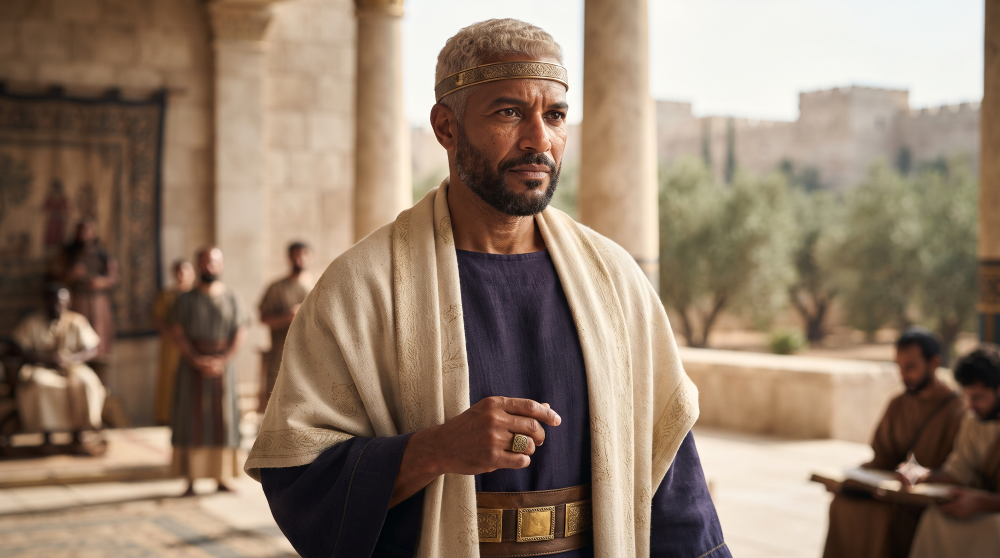
For centuries, history and legend have whispered of King Solomon’s unparalleled authority. He is often depicted not merely as a king, but as a master of the esoteric—a sovereign sorcerer whose power over the physical world was matched only by his command of the unseen. Central to this legend is the Ring of Solomon, an artifact imbued with divine authority, allowing him to allegedly control 72 Djinn. According to ancient traditions, this seal did not merely signify his rule; it acted as a conduit, allowing him to bind entities that existed beyond the human veil.
Solomon’s Involvement with the Djinn
While modern pop culture paints a sanitized, whimsical picture of genies, the ancient scriptures tell a story of subjugation and raw power. Solomon’s involvement with the Djinn was defined by absolute dominance. He did not ask for favors; he commanded them to perform tasks—from architectural marvels to clandestine operations—as if they were his personal, immortal workforce. To Solomon, these beings were not magical friends but formidable, primordial forces that required a heavy hand to control.
Biblical tradition, particularly within the literature of the Second Temple period and subsequent occult grimoires like the Testament of Solomon, characterizes the king as a master who utilized a divinely bestowed ring to seal, bind, and command demons and spirits to aid in the construction of the Temple in Jerusalem. Similarly, the Quran provides a definitive account in Surah Saba (34:12-14), describing how Solomon controlled the Djinn, forcing them to work under his command to build elevated chambers, statues, and basins like reservoirs.
In both traditions, this relationship was not collaborative; it was a divine decree of servitude, where the Djinn were compelled to labor under the king’s authority, suffering punishment should they deviate from his orders.
The Origin of the Genie and the Lamp Story
How did we go from the terrifying, sovereign-bound Djinn of antiquity to the “smiling entity in a teapot” trope? The transition began with the framing of these primordial entities within the romanticized structure of The One Thousand and One Nights. While the collection captures the wonder of the ancient world, it also served as the catalyst for domesticating the Djinn. The story of Aladdin—a tale popularized in the West centuries later—perfected this dilution. By confining a being of ancient, celestial fire to a brass lamp, the narrative transformed a terrifying act of aggressive imprisonment into a whimsical childhood cliché.
Binding a sovereign being to an object was never a fairy tale—it was a brutal masterstroke of erasure. By framing the Djinn as a servant who exists solely to grant “three wishes” for a mortal master, the Aladdin trope stripped these entities of their danger, gravity, and ancient autonomy. Over generations, the true, harrowing terror of the Djinn was systematically sanitized, reducing once-feared architects of the supernatural into docile, subservient cosmic slaves for the sake of entertainment.
The Backstory of Djinn in The Vital Sacrifice
In The Vital Sacrifice, I tear away these childish gimmicks to return to the untamed origin of the Djinn. In this novel, the genie spirit still exists, but it has evolved beyond the lamp. They have merged with certain men who make the transition while they are strong and young to become independent, sophisticated creatures who are part of the human race. They do not hide in ruins, caves, or bathrooms. Instead, they move through the upper echelons of modern luxury in modern times and throughout various intervals in history. They are no longer enslaved wish-granters. They are half-men who live the glorious life that King Solomon did until their time on earth is up.
Are you ready to explore the new interpretation of Djinn, often referred to in the West as genies? Click the book or button below to get your copy of the novel, The Vital Sacrifice


View Other Posts Like This One
Mel Childs is the author of The Vital Sacrifice and The Missing Link. Additionally, she has written freelance for various national publications, including Parade Home & Garden, Dengarden, Bob Vila, This Old House, Lawnstarter, WikiLawn, and many more.